Mayonnaise Production Line

Mayonnaise Processing Line
Production Video: https://www.youtube.com/watch?v=AkAcycJx0pI
I. Core Processing Equipment
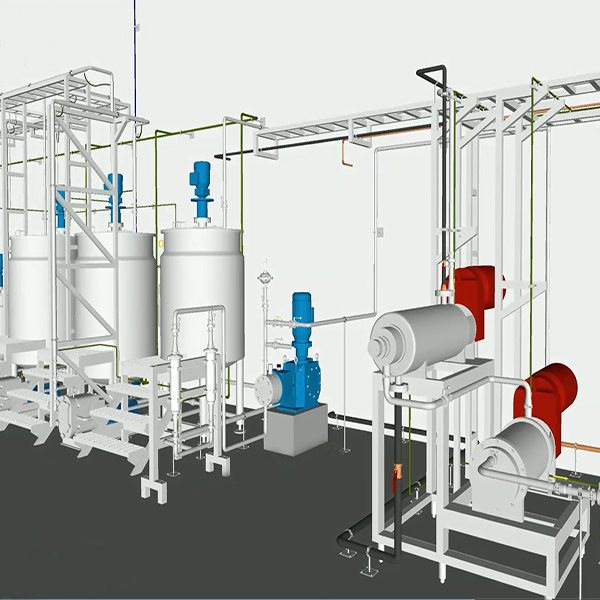
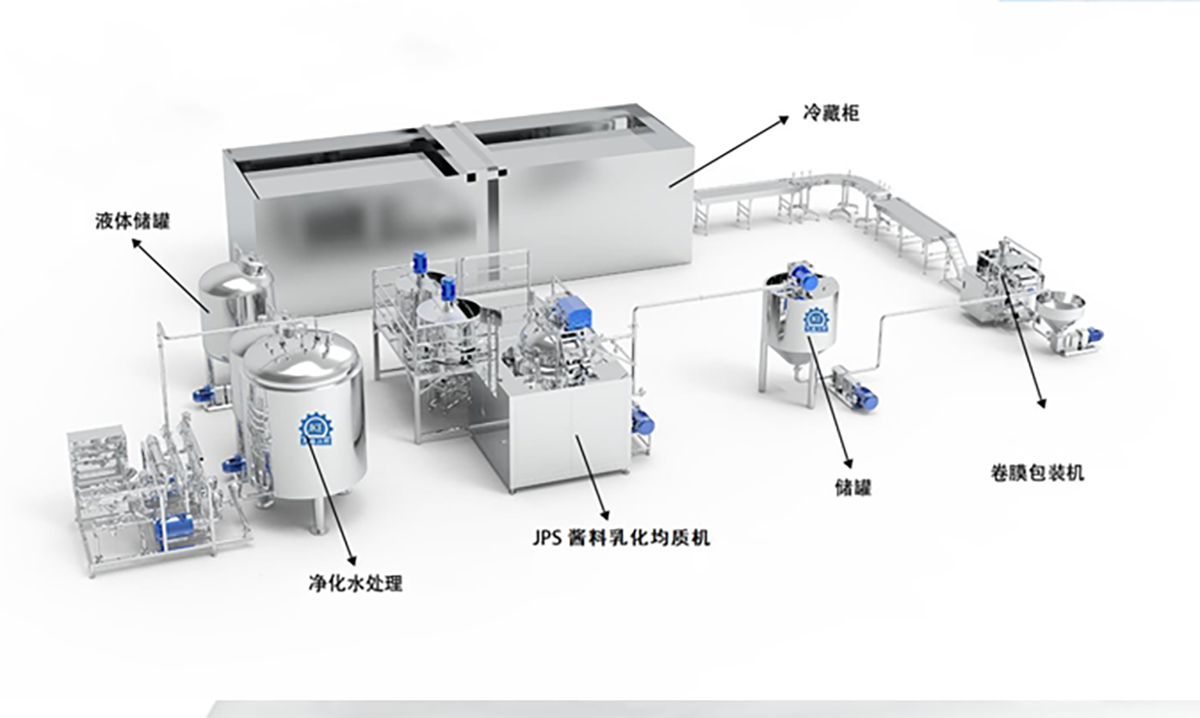
A complete industrial mayonnaise production line usually includes a raw material pretreatment system, an emulsification and homogenization system, and a sterilization and filling system. The equipment material is usually required to be food-grade 304 stainless steel, and the contact surface is polished to ensure hygiene and safety.
Equipment Name Core Function and Technical Requirements
Key Parameter Description
Egg Beating and Separation Equipment Clean and crack eggs to separate eggshells, yolks, and whites. Efficiency can reach over 30,000 eggs per hour.
Mixing and Preheating Tank
Prepare oil and water phase raw materials separately and mix and preheat them.
Equipped with a high-speed stirrer, the water phase tank has a water and powder mixing function.
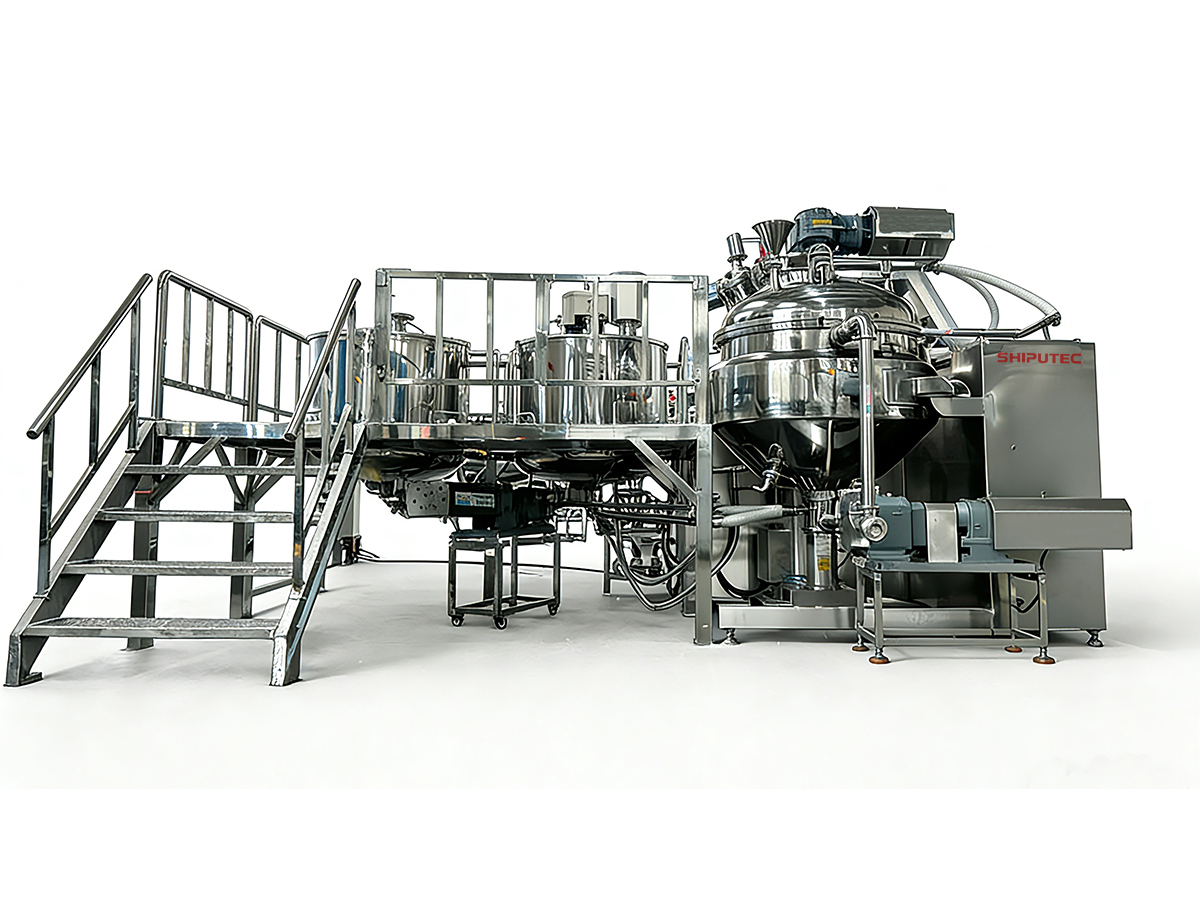
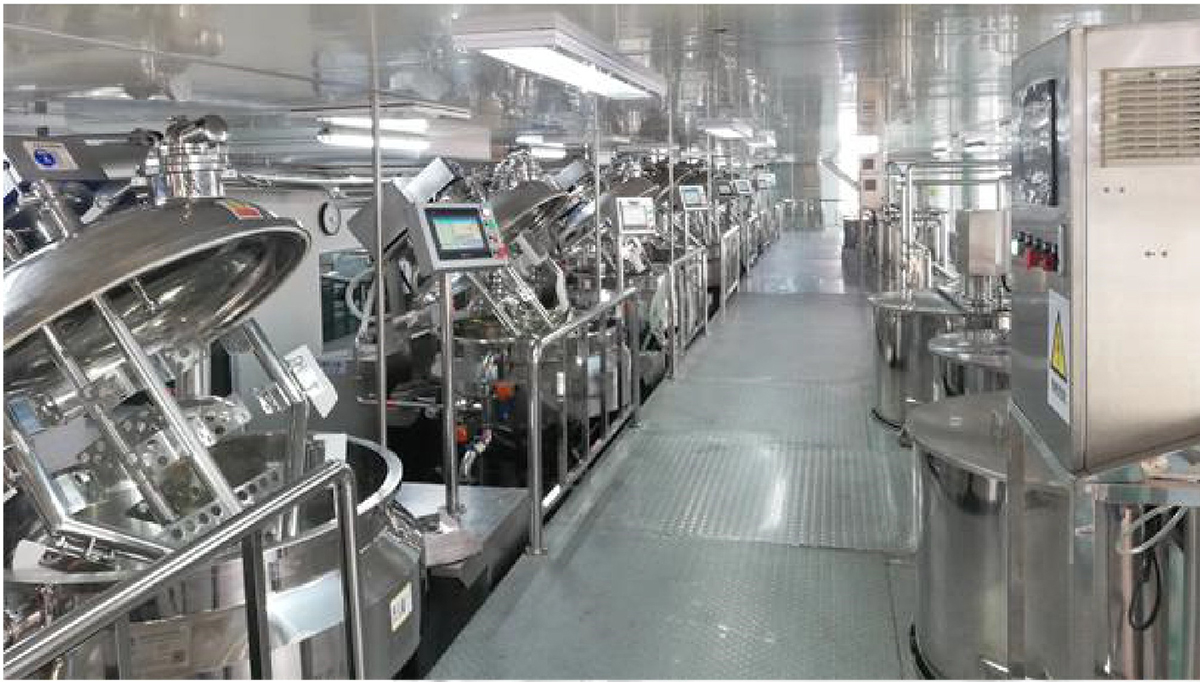
Vacuum Emulsification Homogenizer
Emulsification under vacuum conditions through ultra-high-speed shearing.
Rotational speed can reach 10,500 rpm, with a stator-rotor gap of 0.2-0.3 mm.
Colloid Mill Further refine the material to ensure a smooth and fine texture. Fineness can reach below 50 μm.
Filling and Sealing Equipment
Precisely fill the finished product and vacuum cap it. Filling accuracy ±1%, vacuum degree ≥ -90 kPa.
Sterilization and Inspection Equipment Perform pasteurization and metal impurity detection on the finished product.
Temperature control accuracy ±1℃, metal detection sensitivity Fe ≤ 0.5 mm.
II. Typical Processing Technology Flow
Industrial production mainly adopts the vacuum emulsification process, which is divided into several stages: preparation of oil and water phases, vacuum emulsification, homogenization and refinement, filling and sterilization.
1. Raw material preparation and pretreatment
• Egg yolk liquid treatment: Select fresh eggs, clean, disinfect, and dry them before cracking and taking the yolks. According to the process requirements, the egg yolks can undergo pasteurization (e.g., 60℃ for 1-2 minutes) or a fermentation process to improve the flavor.
• Preparation of water and oil phases:
o Water phase: Mix and stir water, vinegar, lemon juice, salt, sugar, mustard, and other water-soluble and flavoring ingredients in a tank. If the formula contains starch or gels (such as xanthan gum), they need to be dissolved in advance to ensure no particles.
o Oil phase: Mix vegetable oil (usually salad oil, with a content of 70%-75%) and fat-soluble components in the oil phase tank.
2. Core emulsification stage
• Vacuum feeding: Start the vacuum system and first draw the water phase material into the vacuum emulsification pot, and start the scraping wall stirrer (rotational speed about 60-80 rpm).
• Slow oil intake: With the high-speed homogenizer (rotational speed about 9000 rpm) running, draw the vegetable oil from the oil phase tank into the emulsification pot through vacuum negative pressure. This step is crucial; initially, the oil must be added slowly to form an oil-in-water structure and avoid oil-water separation or "reverse phase".
• High-pressure homogenization: The material is subjected to intense shearing, impact, and cavitation effects in the emulsification head, breaking into extremely fine particles and forming a stable, viscous emulsion.
3. Post-processing stage
• Refinement and adjustment: The initially emulsified material can be further processed through a colloid mill or pipeline emulsifier in a circulation manner to make the particle size more uniform (fineness ≤ 50 μm).
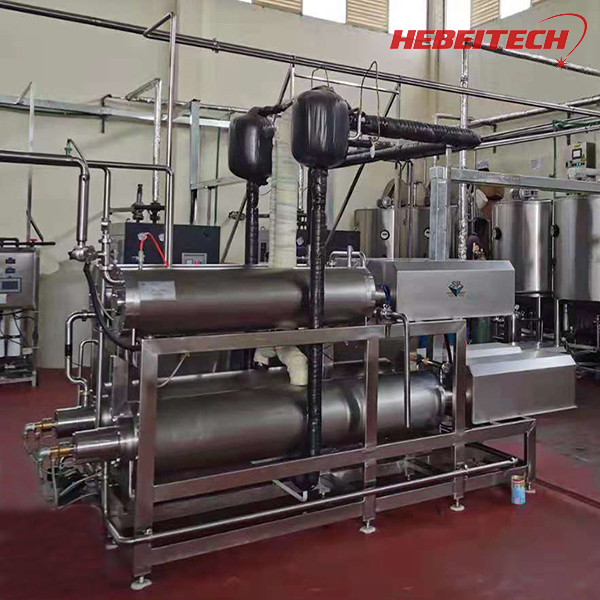
• Sterilization: Use tunnel spray pasteurization or tubular sterilizer for pasteurization, with precise temperature control. In recent years, ultra-high pressure technology (300-600 Mpa) has also been applied to mayonnaise sterilization, which can kill microorganisms without heating and better preserve color and flavor.
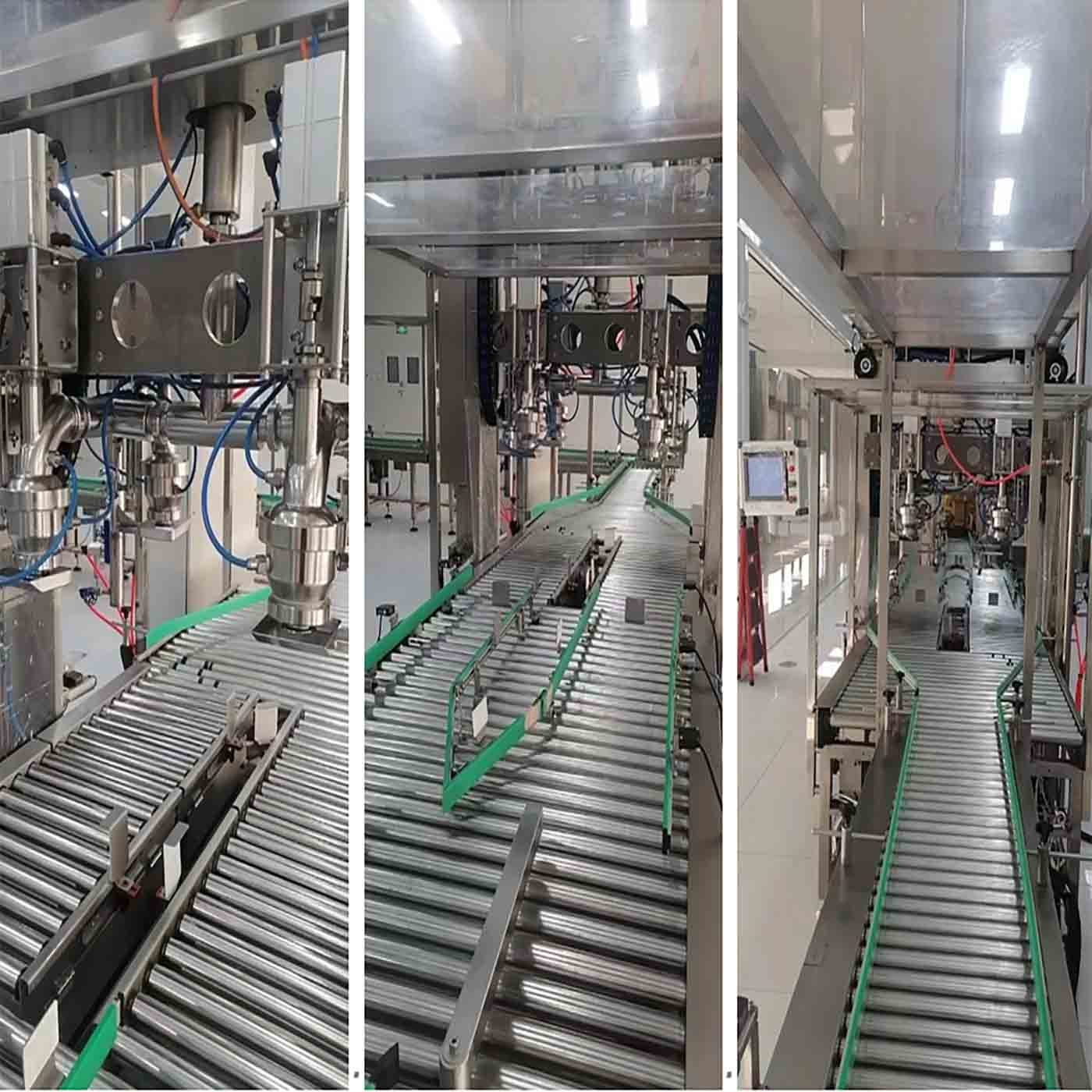
• Filling and inspection: The cooled sauce after sterilization is sent to the filling machine. Usually, piston or screw filling machines are used to adapt to high-viscosity products, followed by vacuum capping. Finished products need to be inspected by a metal detector to remove those containing metal contaminants.
III. Key Points and Precautions in the Process
• Emulsification Temperature: The temperature of the material will rise during the emulsification process. It is usually necessary to control the temperature to prevent demulsification. Some equipment is equipped with jacket cooling functions.
• Timing of Adding Vinegar: In traditional processes, when the emulsified material increases in volume and becomes thicker, adding an appropriate amount of vinegar can reduce viscosity and facilitate further oil addition, following the principle of "adding vinegar when it's hard and oil when it's soft".
• Formula Impact: Egg yolk (rich in lecithin) is a natural emulsifier and its content should be sufficient (usually more than 6%). The oil content should reach a certain standard (for example, mayonnaise usually requires oil content ≥ 75%) to form a stable texture.
In summary, modern mayonnaise processing mainly relies on vacuum emulsifiers combined with precise slow injection of the oil phase, followed by colloid mill refinement and pasteurization, to ensure a fine texture and long-term shelf stability of the product.