Tubular Pasteurizer In Margarine Production

Equipment Description
The tubular pasteurizer is one of the crucial core equipment in margarine production (also known as oleomargarine), mainly used for efficient and continuous high-temperature short-time (HTST) pasteurization of oil phase raw materials. Its application directly affects the safety, quality, and shelf life of the product.
Equipment Picture
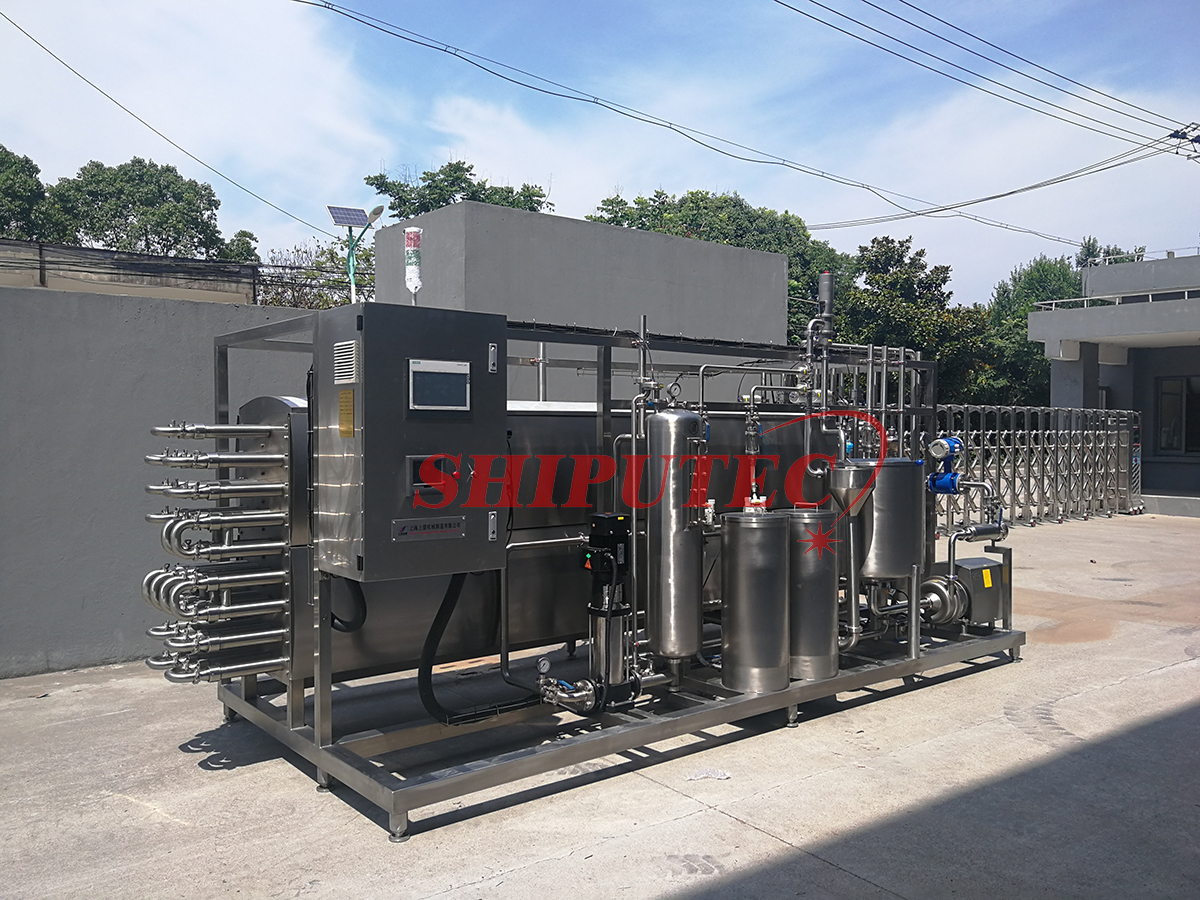
Equipment Description
I. Why is a tubular pasteurizer necessary in margarine production?
The raw materials for margarine mainly include refined vegetable oil, water, dairy components (such as milk powder, whey powder), emulsifiers, salt, vitamins, and flavors. These raw materials, especially the water phase and dairy components, are excellent growth media for microorganisms (such as bacteria, yeast, and mold). If they are not effectively pasteurized, the product will spoil within a short time and may even cause food safety issues.
The core function of the tubular pasteurizer is to thoroughly kill pathogenic and spoilage bacteria in the raw material liquid before the emulsification and shaping of the product, ensuring the safety of the product's microbial indicators and extending its shelf life.
II. The working process of the tubular pasteurizer in the margarine production line
A typical tubular pasteurizer is integrated after the emulsification system and before the rapid cooling machine (Votator or Scraped Surface Heat Exchanger). Its working process is as follows:
1. Preheating and homogenization:
o The pre-mixed and emulsified oil-water mixture (which has now become an emulsion) is first pumped into the pasteurization system.
o The material passes through a preheating section, where the temperature is raised to the optimal temperature for homogenization (usually 60-70°C).
o Subsequently, the high-temperature material enters the high-pressure homogenization valve and is broken down under extremely high pressure (e.g., 150-200 bar), forming extremely small and uniform fat globules and water droplets, which greatly improves the stability and texture of the product.
2. Pasteurization section:
o The homogenized material enters the heating section of the tubular pasteurizer. Here, the material flows through concentric tubes surrounded by steam or high-pressure hot water, and the temperature is rapidly raised to the set pasteurization temperature within a very short time.
o Typical pasteurization process parameters:
Temperature: 85°C - 95°C (adjusted according to the formula and process requirements; some formulas may be higher).
Time: maintained for 15 - 30 seconds. This "holding time" is achieved by designing a specific length of "holding tube" in the pipeline.
o This "high-temperature short-time (HTST)" process can effectively kill all pathogenic and most spoilage bacteria while minimizing thermal damage to the product's flavor, color, and nutritional components.
3. Cooling section:
o After pasteurization, the material must be immediately cooled to prevent excessive heating and the regrowth of microorganisms.
o The material enters the cooling section and undergoes heat exchange with a cold medium (usually ice water), rapidly reducing the temperature to the required temperature for subsequent processes (usually 40°C - 50°C) to enter the rapid cooling machine for crystallization.
4. Heat recovery system (optional but highly efficient configuration):
o Modern tubular pasteurizers are usually equipped with a heat recovery system.
o The cold material entering the heating section and the hot material just exiting the pasteurization section undergo preheat exchange in a special heat exchanger.
o Advantages:
Energy saving: The hot material is pre-cooled, and the cold material is pre-heated, significantly reducing the consumption of steam and cooling water.
Product protection: Avoids local overheating and coking caused by direct contact of cold material with high-temperature walls.
III. Advantages of the tubular pasteurizer over other pasteurization methods
1. Continuous production: Compared with batch pasteurization kettles, the tubular pasteurizer can be seamlessly integrated with the preceding and following processes, enabling fully continuous and automated production with extremely high efficiency. 2. High product quality: The HTST process maximizes the retention of the raw material's flavor and nutrients, avoiding the cooked taste caused by prolonged heating.
3. High thermal energy utilization: Thanks to the heat recovery system, energy consumption is significantly reduced, making the operation cost more advantageous.
4. Small footprint: Compact structure, easy to integrate into existing production lines.
5. Hygienic design: Entirely made of stainless steel, meeting 3-A sanitary standards, with no hygiene dead corners, and easy to perform CIP (in-place cleaning) and SIP (in-place sterilization).
IV. Key Considerations in Application
1. Precise control of process parameters: Temperature, pressure, and flow rate must be kept stable. Even minor fluctuations can affect the sterilization effect (F value) or cause product denaturation (such as protein flocculation).
2. Fouling issue: Proteins in the material tend to caramelize on the tube walls at high temperatures. Regular CIP cleaning (typically using alkaline and acidic solutions in circulation) is necessary; otherwise, it will affect heat transfer efficiency and product hygiene.
3. Maintenance of homogenization valve: The homogenization valve is a precision component that is prone to wear when working under high pressure for a long time. Regular inspection and replacement are required to ensure stable homogenization effect.
4. Compatibility with formulations: Different formulations (especially protein and fat content) have different thermal sensitivities, and the sterilization temperature and time need to be optimized accordingly.
5. Prevention of secondary contamination: The sterilized material must be conveyed to the next process in a closed and sterile environment. Any leakage at any stage can lead to microbial secondary contamination, nullifying the sterilization efforts.
Summary
The tubular sterilizer is an indispensable "safety guard" in the modern production of margarine. Through the continuous high-temperature short-time (HTST) sterilization process, it efficiently kills microorganisms while perfectly balancing the relationship between food safety and product quality. Its features of high efficiency, energy conservation and automation make it a key equipment for ensuring that margarine products meet high standards of quality and safety.
Site Commissioning