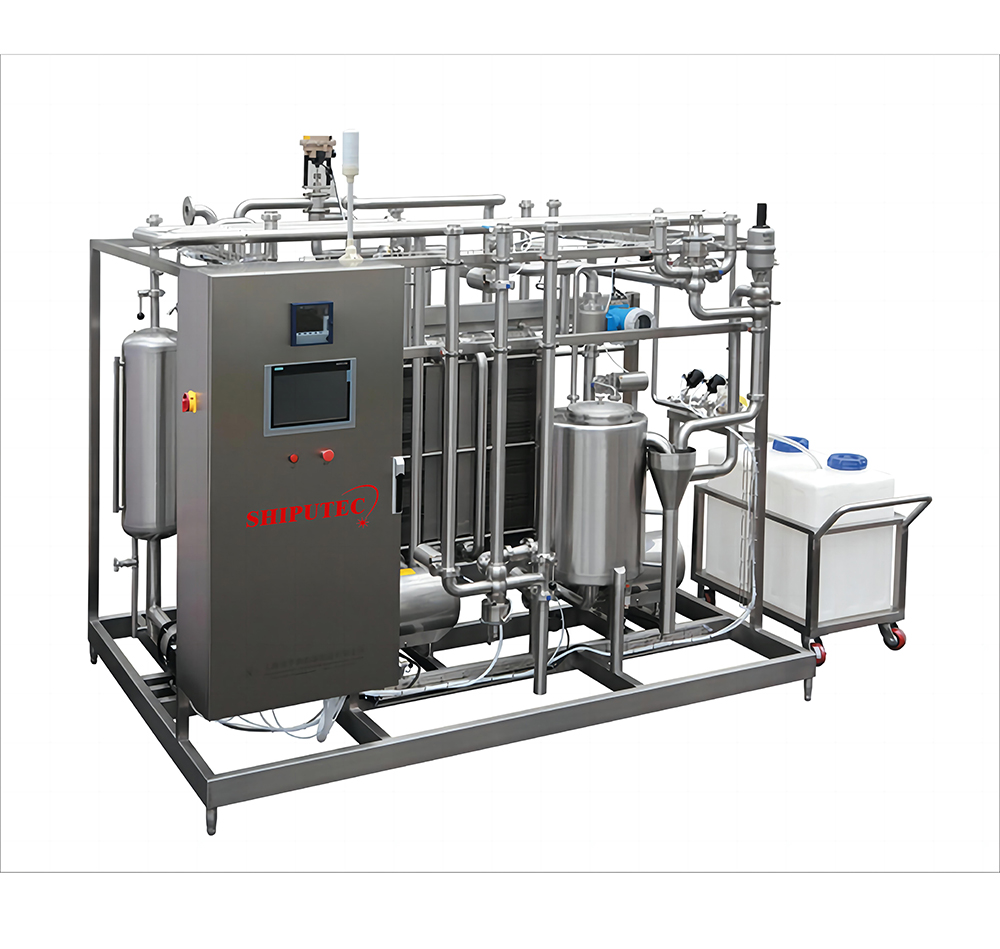
Emulsification Tank In Margarine Production

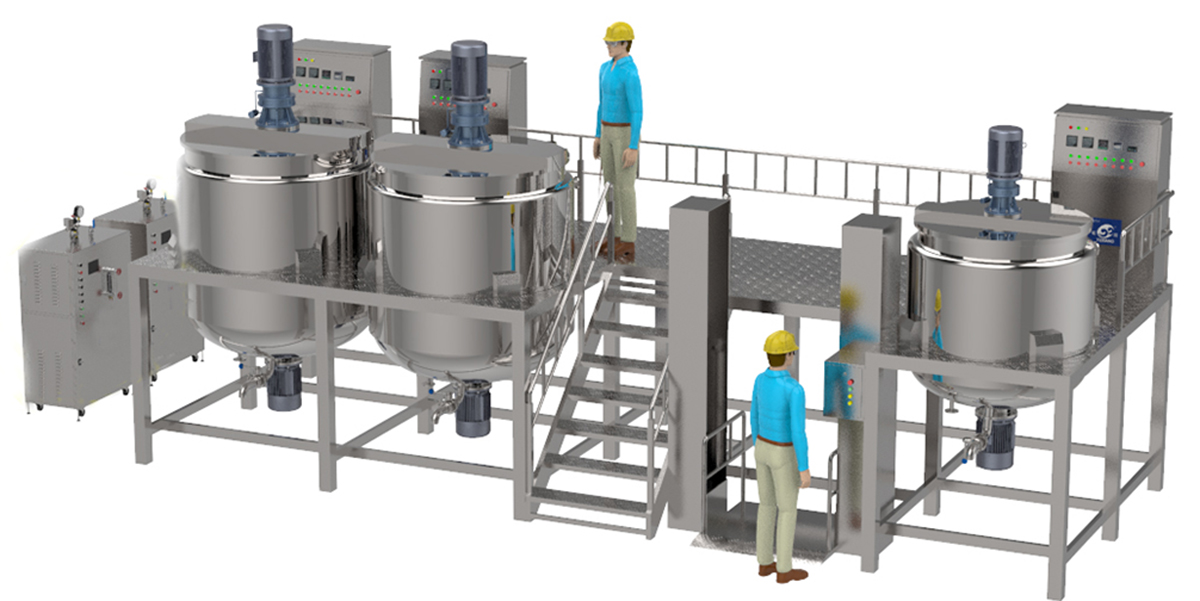
Sketch map
Description
Why is Emulsification Necessary?
Margarine is an oil-in-water (O/W) emulsion, but through processing, it inverts to a stable water-in-oil (W/O) emulsion. The initial creation of a uniform pre-emulsion is crucial for:
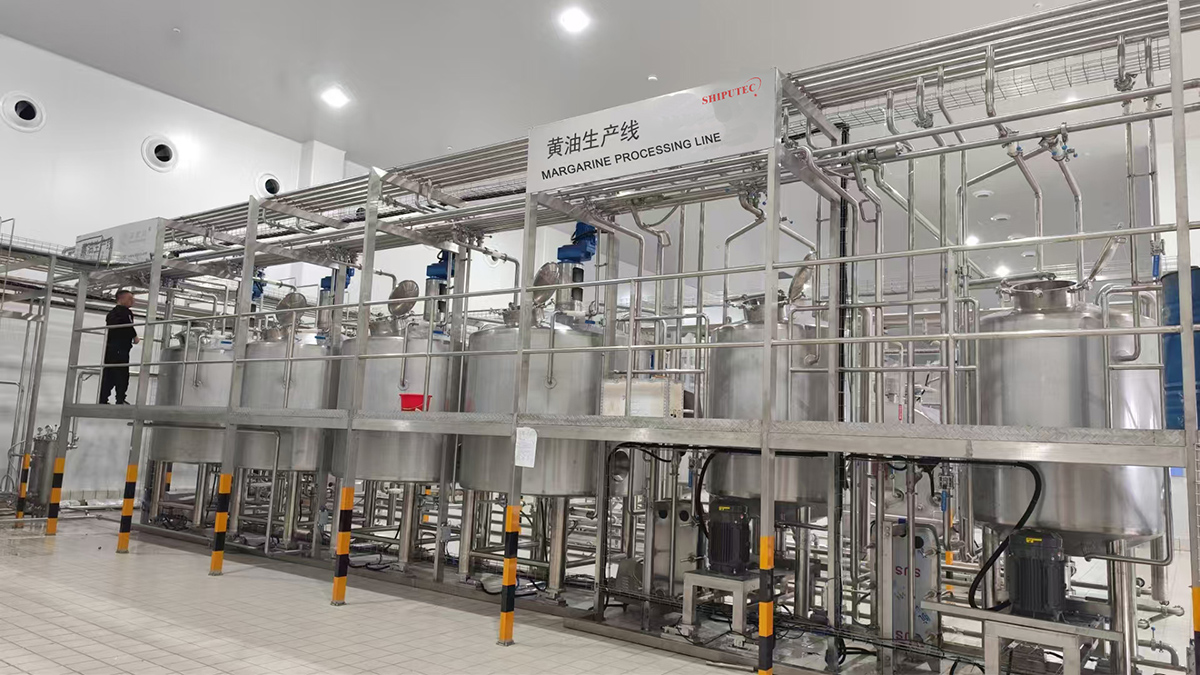
- Uniform Dispersion: Ensuring the water droplets (which contain salt, milk proteins, preservatives like sorbic acid, and acidulants like lactic acid) are evenly distributed throughout the fat phase.
- Ingredient Integration: Properly dissolving and dispersing all minor ingredients like emulsifiers, colors, and flavors.
- Process Stability: Providing a consistent and homogeneous feed to the downstream chilling unit. An inconsistent pre-emulsion would lead to a final product with poor texture, unstable water dispersion, and potential spoilage issues.
Key Components of an Emulsification Tank
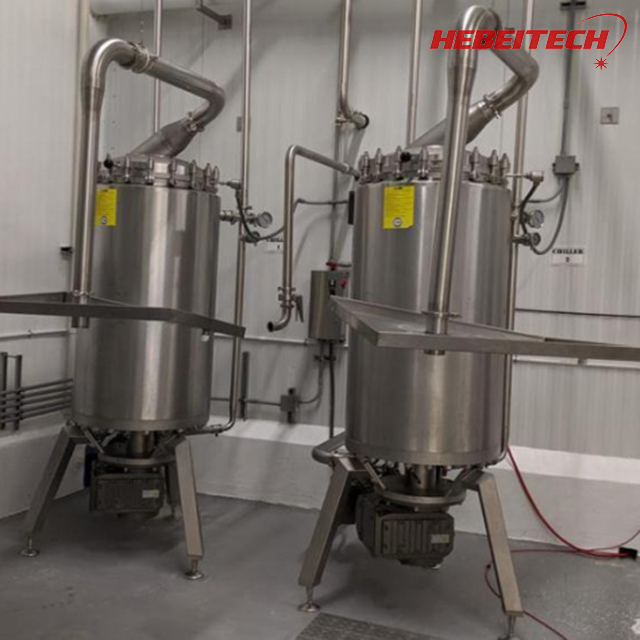
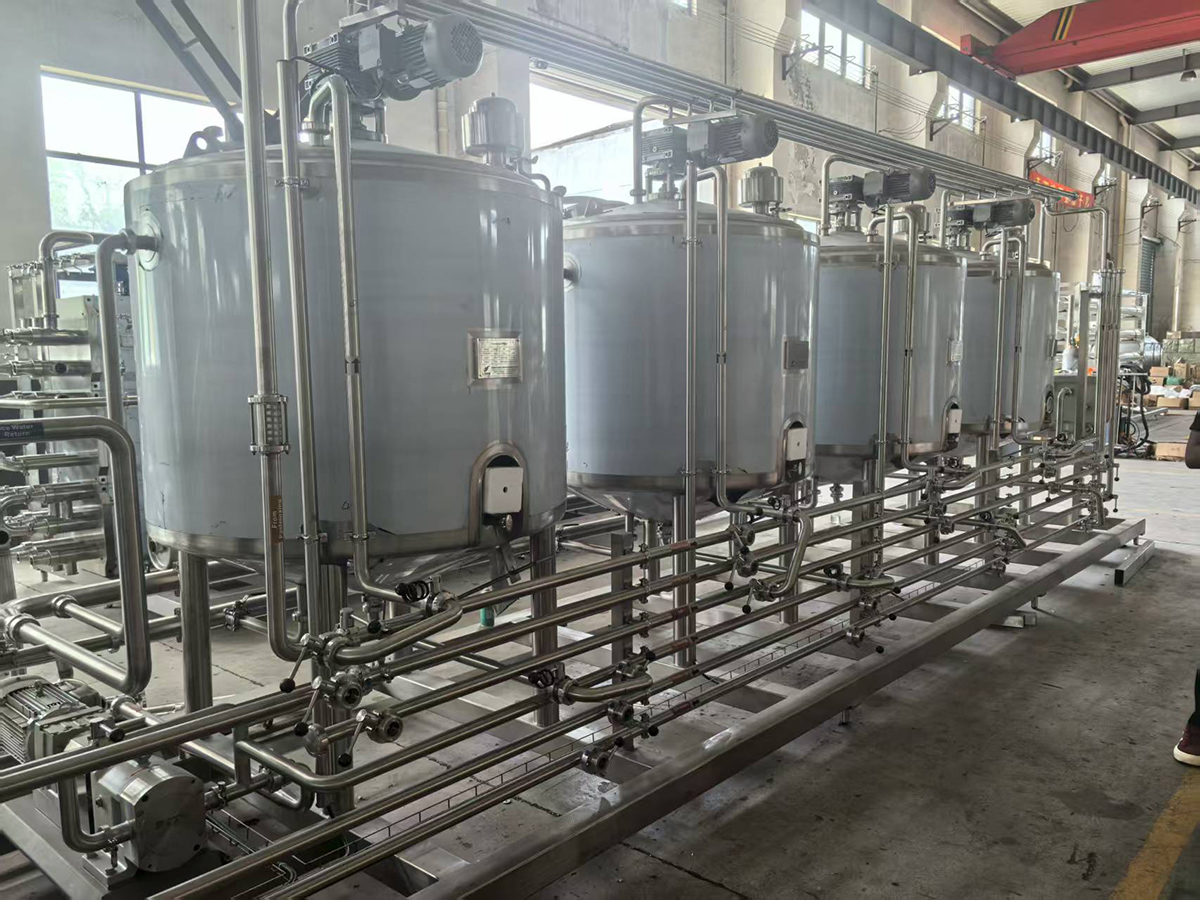
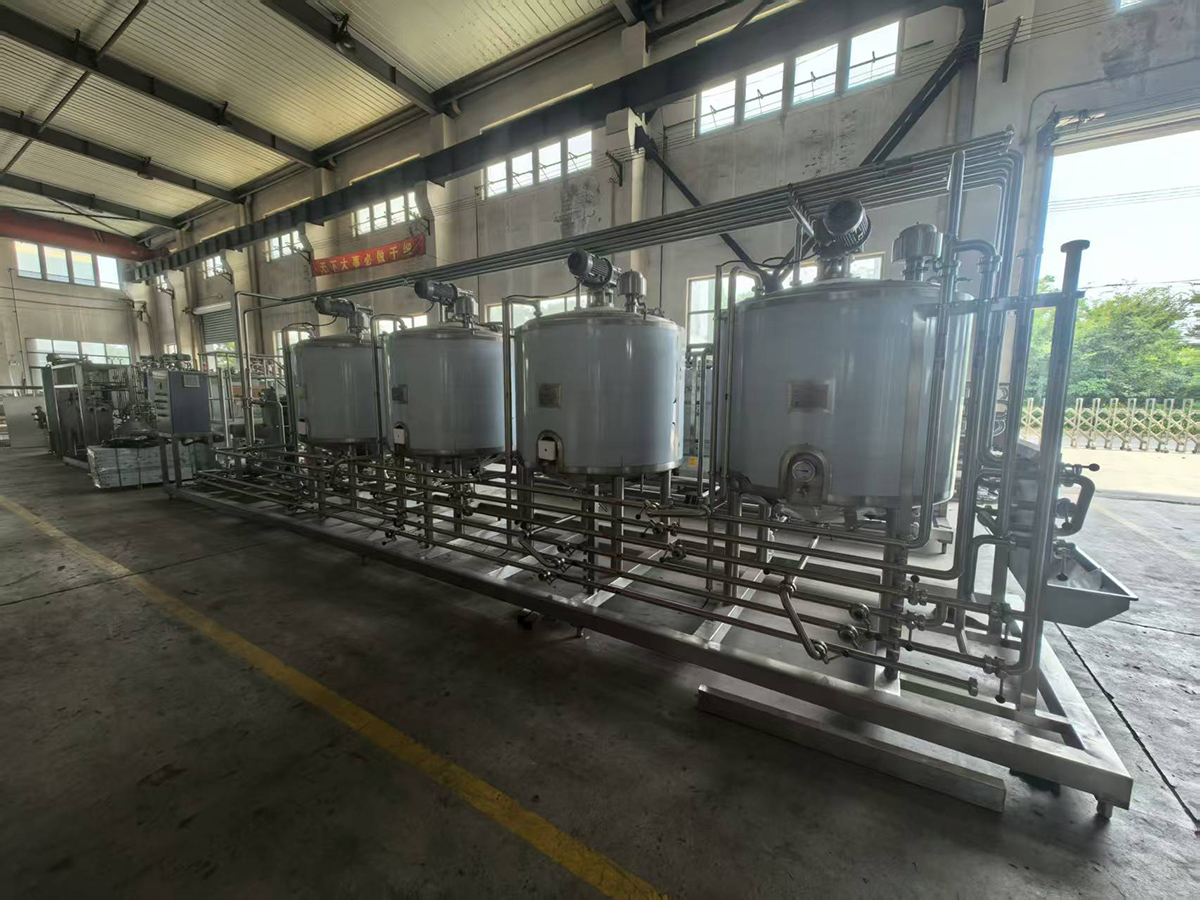
A typical tank is a closed, jacketed, vertical vessel made of stainless steel (e.g., 304 or 316L) for hygiene and corrosion resistance. Its main components include:
- Agitation System: This is the most critical part. It typically consists of:
- A High-Speed Shear Mixer (Impeller): Often a radial-flow impeller like a Turbo-Rotor-Stator mixer. This creates intense mechanical shear, pulling the liquid from the top and forcing it through the stator's fine openings, effectively breaking down droplets and creating the emulsion.
- An Anchor or Paddle Stirrer: A slow-speed scraper agitator that moves close to the tank wall. Its job is to ensure all material in the tank is moving, preventing dead zones and ensuring the entire batch is homogeneous. It keeps the fat from crystallizing on the cool walls of the jacketed tank.
- Heating/Cooling Jacket: The tank wall has a double jacket through which a thermal fluid (usually hot water) is circulated. This is essential for:
- Melting: Ensuring all fats and oils are completely in a liquid state before emulsification.
- Temperature Control: Maintaining the mixture at a temperature above the melting point of the highest-melting fat component (typically 5-10°C above, often around 45-60°C). This is vital to prevent any premature crystallization, which would destroy the emulsion.
- Ingredient Ports: Multiple inlet lines for adding the different phases:
- Main lines for the bulk heated oil blend and water/brine phase.
- Smaller ports for minor ingredients like lecithin, flavors, colors, and vitamins.
- Vacuum System (Optional but common): The tank can be operated under a mild vacuum. This serves two purposes:Control System: Modern tanks are integrated with a PLC/SCADA system to automatically control temperature, agitation speed, ingredient addition sequences, and holding time.
- De-aeration: Removes entrained air from the mixture, which prevents a porous or grainy texture in the final margarine and improves its density and appearance.
- Controlled Environment: Prevents oxidation of the sensitive oils during processing.
The Operational Sequence
The process in the emulsification tank follows a specific sequence:
- Charging: The liquid oil blend (which contains hard fats, soft oils, and fat-soluble emulsifiers like mono- and diglycerides) is pumped into the tank first. The jacket heating is on to maintain temperature.
- Mixing: The anchor stirrer is started to create a vortex.
- Addition: The water phase (containing water, salt, preservatives, and water-soluble ingredients) is slowly metered into the vortex of the swirling oil phase. Adding water to oil (not vice versa) promotes the formation of a water-in-oil emulsion.
- High-Shear Emulsification: Once both phases are in, the high-shear rotor-stator mixer is activated for a set time (e.g., 5-15 minutes) to create the fine pre-emulsion.
- Holding: The mixture is held under gentle agitation and temperature control until it is ready to be pumped to the next stage (the pasteurizer, if applicable, and then the chilling unit).
What Happens Next?
The coarse emulsion from this tank is then pumped to a scraped-surface heat exchanger (Votator™ or A-unit). Here, under intense cooling and mechanical working, the fat crystallizes around the finely dispersed water droplets, stabilizing the water-in-oil emulsion and building the final plastic structure and texture of the margarine.
Summary: Key Points
- Purpose: To create a uniform, coarse, and stable pre-emulsion of the fat and water phases.
- Critical Parameter: Temperature control is paramount to keep all fats molten.
- Key Mechanism: High-shear mechanical agitation is used to break the water phase into millions of tiny droplets.
- Result: A consistent pre-emulsion that ensures the final margarine product has a uniform texture, flavor, color, and shelf stability.
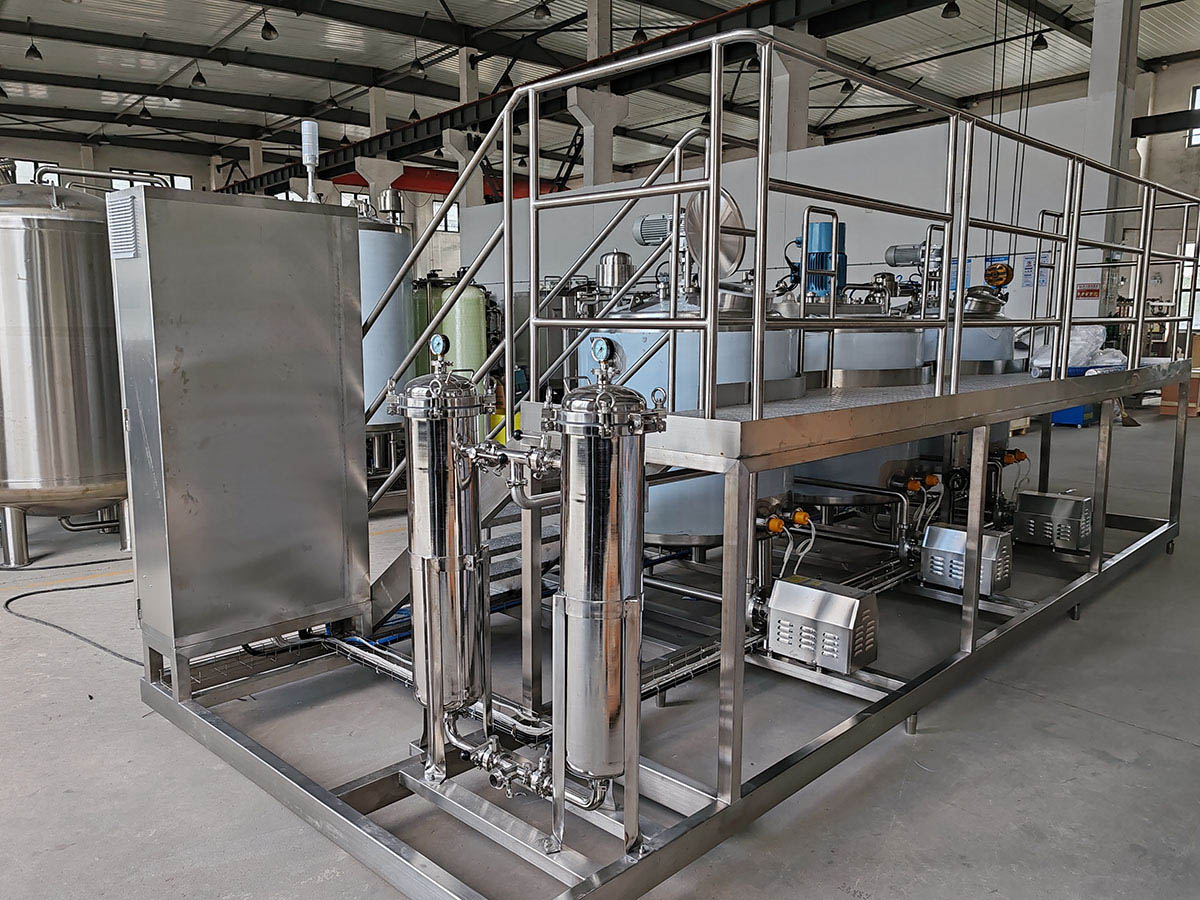
In essence, the emulsification tank sets the stage for everything that follows. A poor emulsion here cannot be fixed later and will result in a substandard final product.
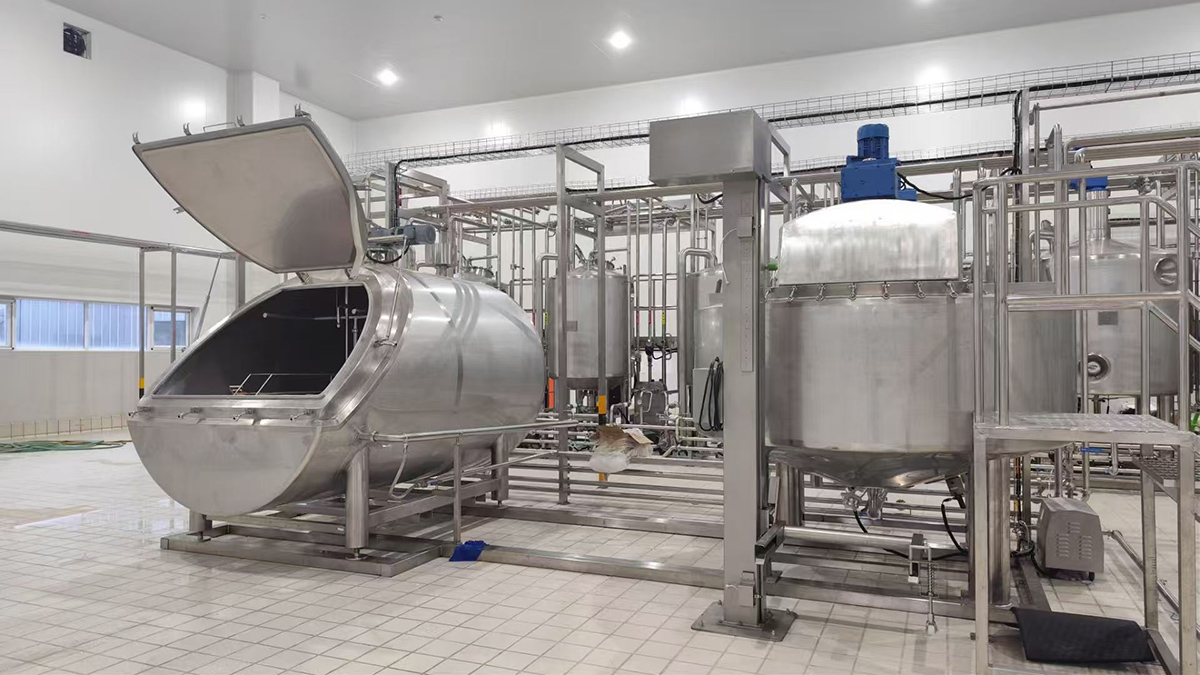
Site Commissioning