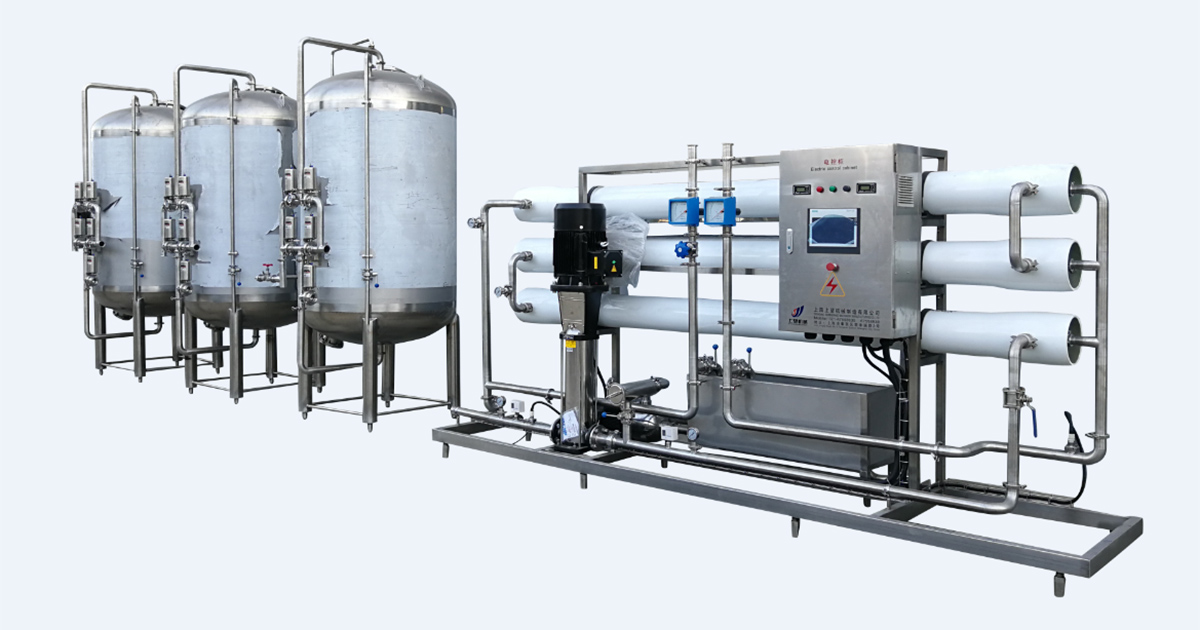
Water Treatment Unit

Equipment Photo
Description
Key Functions of Fresh Water in the Margarine Process
- Formation of Structure: The water droplets are critical for creating the final product's structure, texture, and spreadability. The size and distribution of these droplets directly influence whether the margarine is soft and spreadable or firm and bakery-style.
- Flavor Carrier: Water itself is tasteless, but it acts as a carrier for other essential ingredients that are dissolved into it before emulsification. These include:Microbiological Control: The water phase is where bacteria, yeast, and molds can grow. Therefore, its composition and preparation are vital for product safety and shelf life. The use of preservatives and pasteurization of the water phase is standard practice.
- Salt (Sodium Chloride): A major flavor component.
- Preservatives: Such as potassium sorbate or citric acid, to prevent microbial growth in the water phase.
- Milk Proteins or Whey: Often added to provide a creamy, dairy-like flavor. These must be dissolved in water.
- Lecithin (as an emulsifier): While some lecithin is added to the fat phase, it can also be part of the water phase.
- Crystallization and Melting Sensation: The contrast between the solid fat crystals and the cool, liquid water droplets is what creates the pleasant melting sensation in the mouth, similar to butter.
Where is Water Used in the Margarine Production Process?
The journey of water in a margarine factory is highly controlled:
- Water Preparation: Fresh water from the municipal supply is first treated. It is typically softened and demineralized (deionized) to remove minerals like calcium and magnesium. These minerals can interfere with emulsifiers, affect flavor, and promote oxidation of the fats, leading to rancidity.
- Mixing the Aqueous Phase: In a separate tank, the prepared water is heated and the salt, preservatives, and any milk-based powders are added and thoroughly dissolved. This mixture is often called the "brine" or "water phase."
- Pasteurization: The water phase is pasteurized (heated to ~80-90°C / 176-194°F for a short time) to destroy any microorganisms. It is then cooled to a precise temperature before mixing with the fat.
- Emulsification: The prepared water phase is metered in precise proportions (typically 16-20% of the final product) into the melted fat blend, which contains the oil-soluble ingredients (colors, flavors, fat-soluble emulsifiers like mono- and diglycerides). High-speed agitators create a coarse pre-emulsion.
- Chilling and Crystallization (The Votator): The pre-emulsion is pumped through a scraped-surface heat exchanger (a "Votator" or "Perfector"). Here, it is rapidly chilled. As the fat crystallizes, the shear from the scraping blades simultaneously breaks the water droplets down to a very fine size (1-10 microns). This fine dispersion is crucial for stability and preventing microbial growth, as large droplets would be unstable and prone to spoilage.
- Packaging: The final margarine is then packaged and sent for tempering (conditioning to stabilize the fat crystals).
Critical Quality Considerations for Water
- Purity: As mentioned, water must be demineralized and free of impurities.
- Microbiological Quality: It must be microbiologically safe. Pasteurization of the final water phase is non-negotiable.
- Precise Proportioning: The ratio of water to fat must be exact to meet the product's legal and quality standards (e.g., a "80% fat spread" must contain exactly 20% water and other aqueous ingredients).
Conclusion
Fresh water is far from just a filler in margarine. It is a fundamental structural ingredient that is meticulously prepared, treated, and incorporated. Its primary role is to form the emulsion, carry flavor and preservatives, and contribute to the final product's texture, safety, and characteristic melting feel in the mouth. The quality and treatment of the water are directly linked to the quality and shelf-life of the margarine itself.
Site Commissioning

Write your message here and send it to us