Scraped Surface Heat Exchangers

Function & Advantage of Various Votator
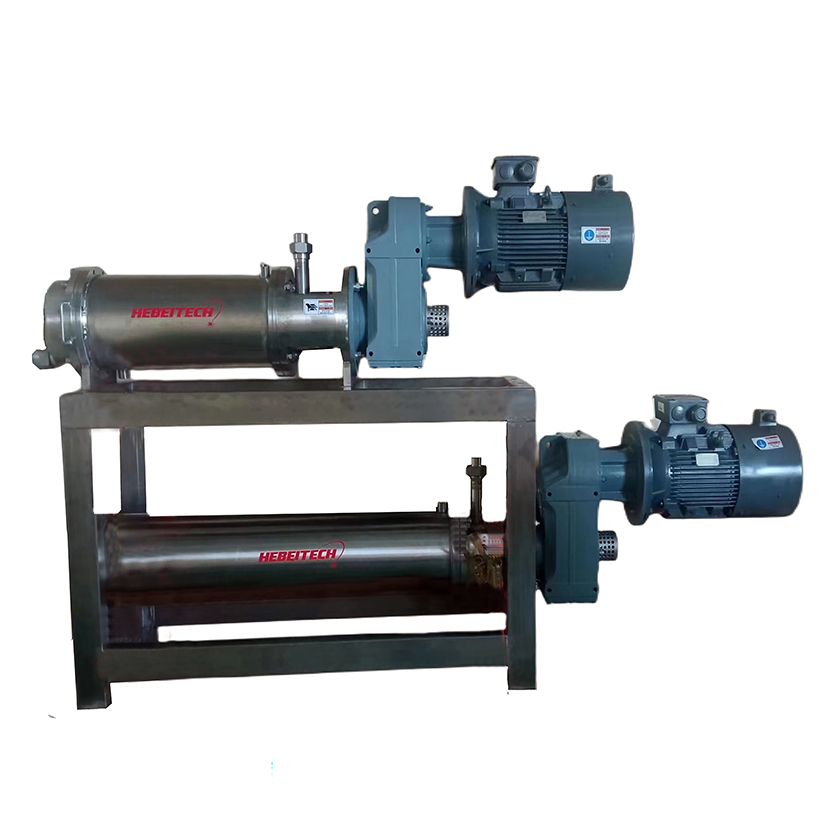
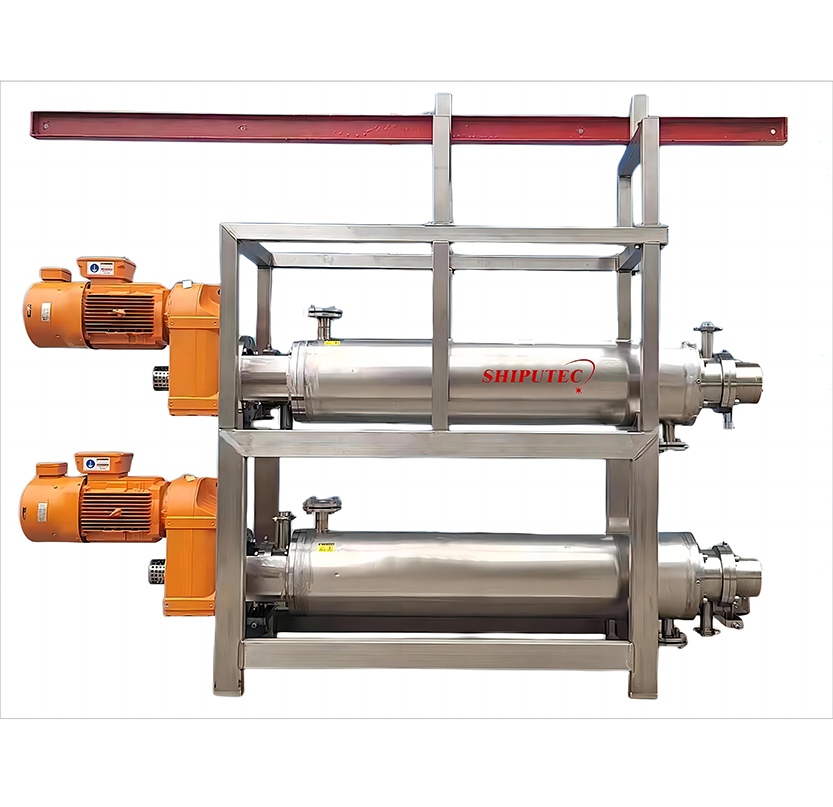
The Scraped Surface Heat Exchanger is specifically designed for high-viscosity, heat-sensitive, prone-to-crystallization, and particle-containing food and related materials. It achieves efficient, uniform, and non-clogged heat exchange through the continuous scraping of the heat transfer inner wall by rotating scrapers. It can precisely complete heating, cooling, sterilization, crystallization, etc.
The SHIPUTEC’s SSHES cover a working pressure range of 20–120 bars, forming four series: SPV, SPSV, SPT, and SPVG, fully adapting to the continuous production of core products such as shortening, artificial cream, butter, jam, and edible gel.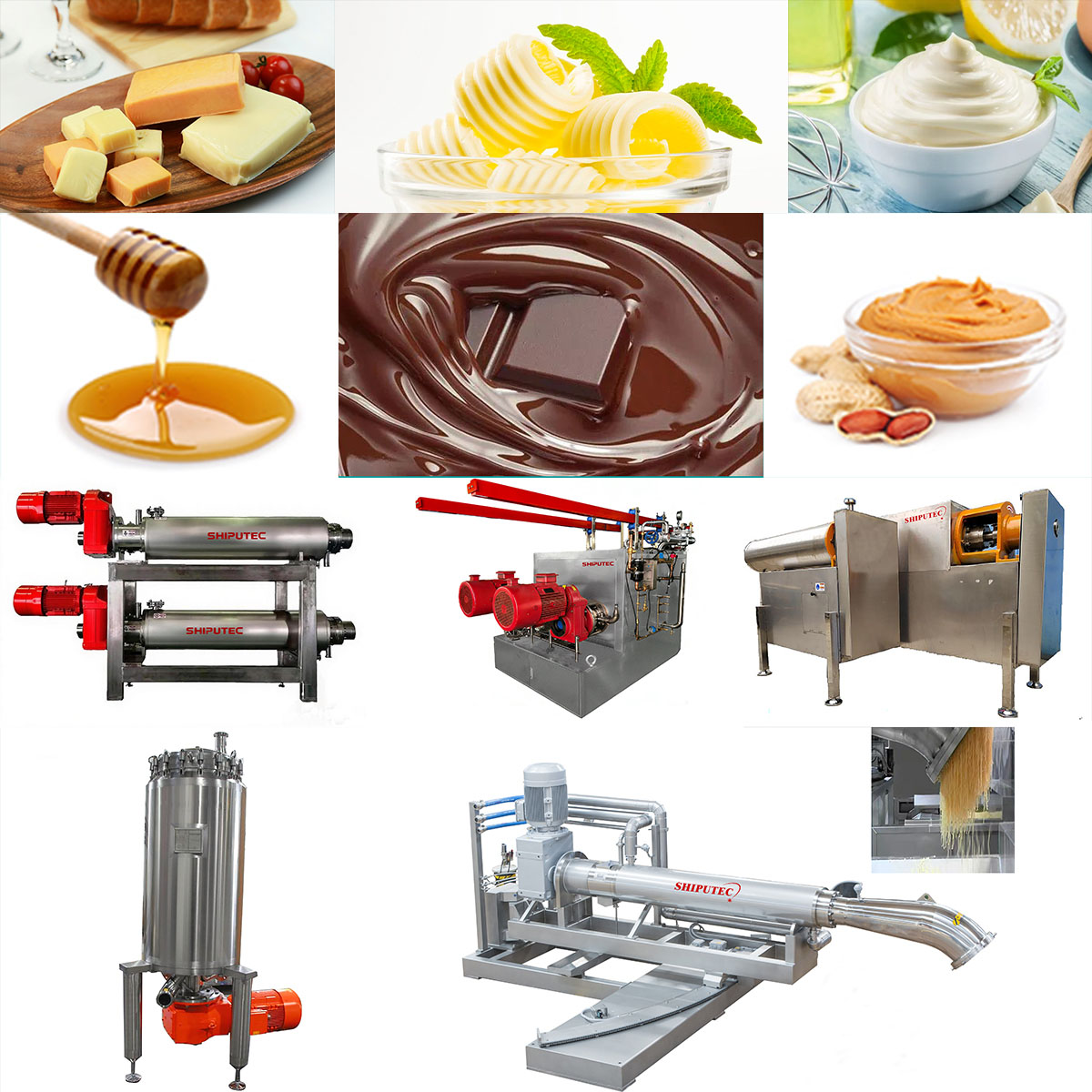
1. Core Technical Advantages
² High-efficiency heat transfer and self-cleaning: Dynamic scraping of the thermal boundary layer, with a heat transfer coefficient far exceeding that of traditional heat exchangers, eliminating fouling and clogging, and ensuring the quality of heat-sensitive materials.
² Wide viscosity and pressure compatibility: Handles a wide viscosity range, with a working pressure of 20–120 bars, meeting the needs of all scenarios from low-pressure paste to high-pressure butter.
² Precise temperature control and short residence time: The material residence time is in the second level, instantaneous heat exchange, maximizing the retention of flavor, nutrition, and texture.
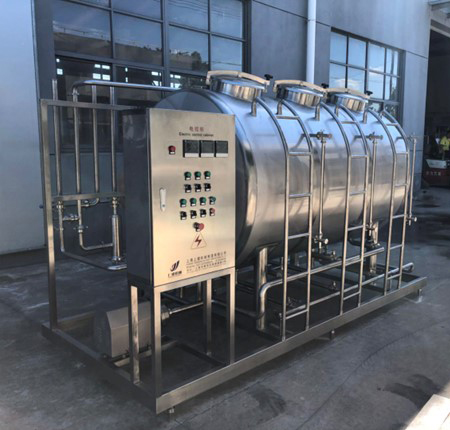
² Hygiene and durable design: Food-grade materials, no dead corners structure, suitable for CIP/SIP cleaning, in line with food production safety standards.
² Customized process matching: Selectable based on material characteristics (viscosity, particles, heat sensitivity) and process goals (sterilization / crystallization / tempering).
2. Detailed Explanation of Four Series
SPV Low-pressure Scraped Surface Heat Exchanger
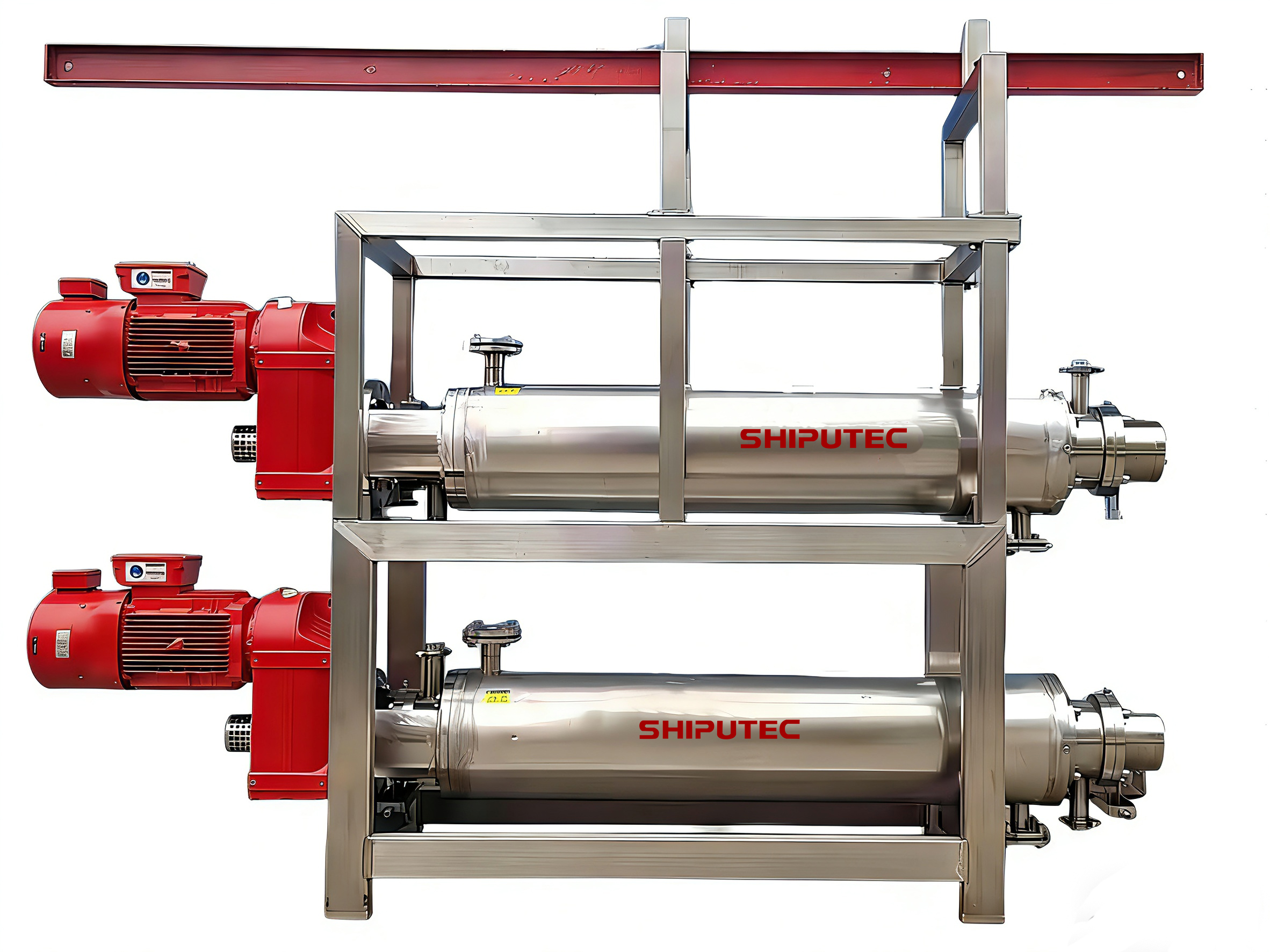
² Core positioning: Low-pressure general-purpose type, suitable for crystallization and sterilization of medium-low and medium-high viscosity paste materials.
² Working pressure: 20–40 bars
² Structural features: Standard rotating scraper design, compact structure, convenient maintenance, outstanding cost performance.
² Typical applications
Oils: Continuous cooling and crystallization of shortening and industrial artificial cream, precise control of fat crystal type.
Paste types: mayonnaise, chocolate sauce, peanut sauce, salad sauce heating and cooling tempering.
Others: Syrup, honey, pectin, etc., heat exchange treatment of high-viscosity fluids.
SPSV High-pressure Scraped Surface Heat Exchanger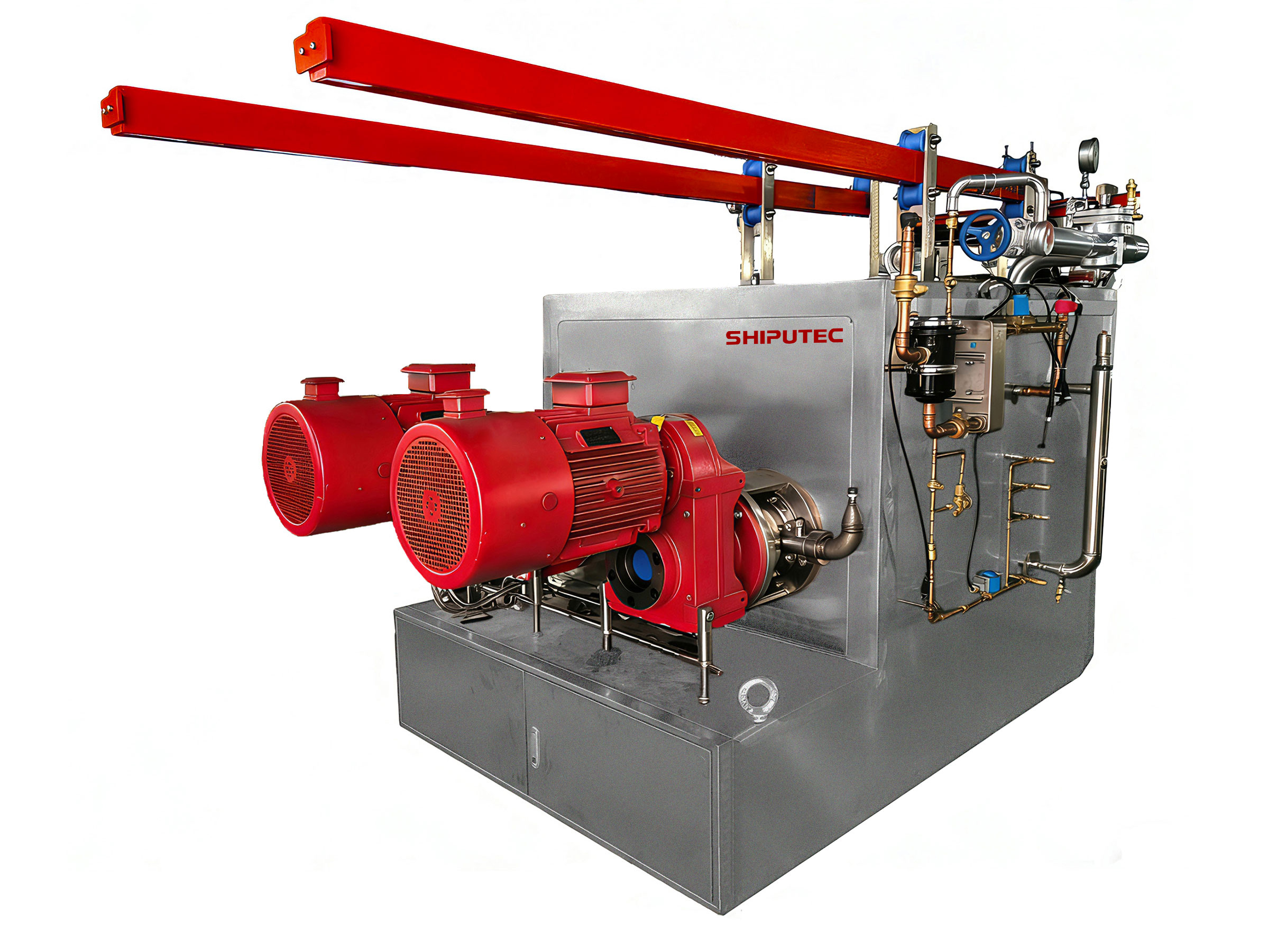
² Core positioning: High-pressure dedicated type, meeting the molding and crystallization requirements of high-pressure and high-density materials such as butter.
² Working pressure: 60–120 bars
² Structural features: Reinforced pressure-resistant structure, high-torque transmission, suitable for material transportation and crystallization molding under high pressure.
² Typical applications
Sheet butter, block butter high-pressure cooling crystallization and shaping.
High-hardness butter, special fat products high-pressure tempering treatment.
SPT Series Scraped Surface Heat Exchanger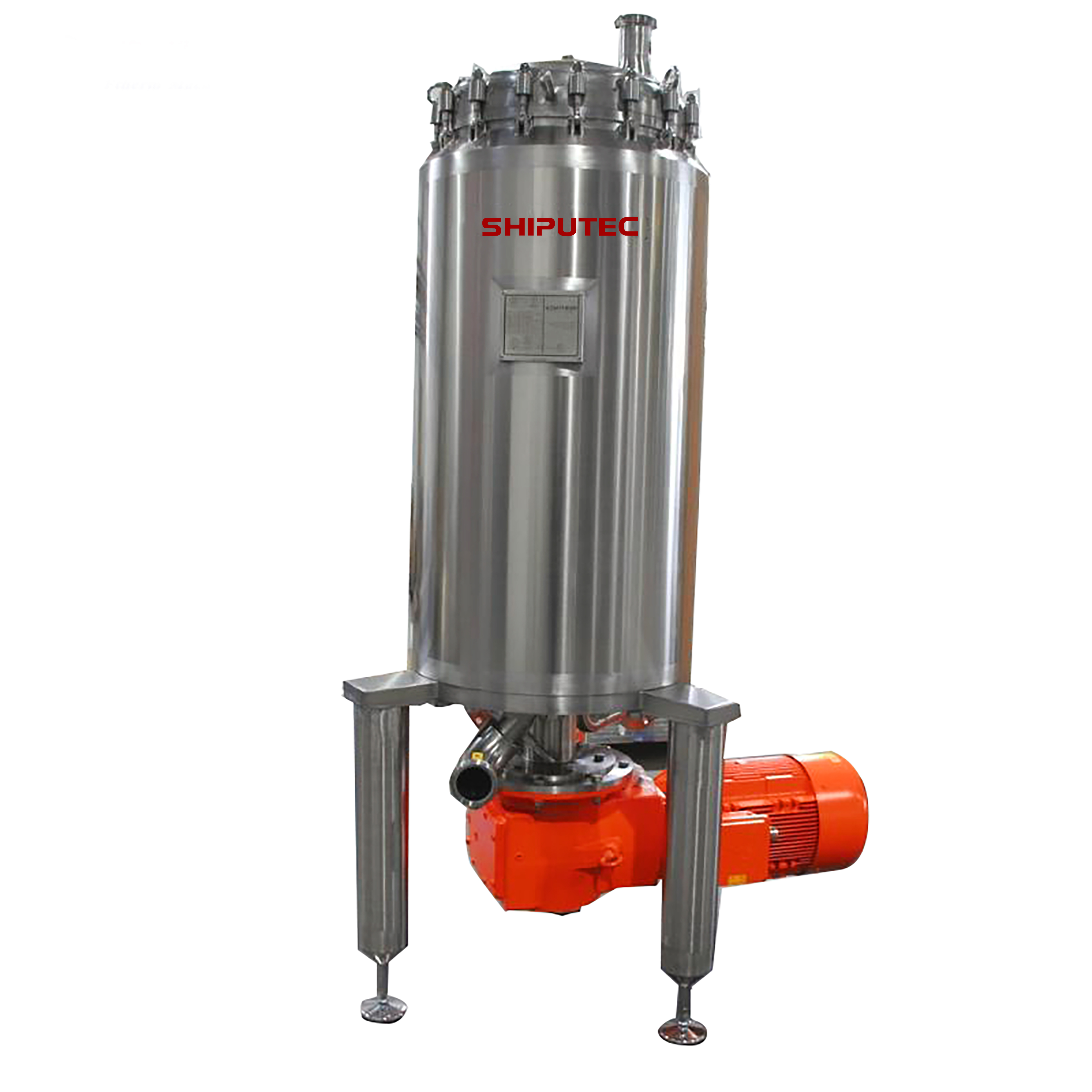
² Core positioning: Solid-containing dedicated type, specifically designed for fruit jam materials with solid particles and pulp.
² Working pressure: 30–80 bars
² Structural features: Large gap, wear-resistant scraper design, allowing passage of certain-sized solid particles, preventing blockage and crushing.
² Typical applications
Crystallization and crystallization of strawberry jam, blueberry jam, apricot jam, etc., containing pulp fruit jam.
Heating and cooling treatment of fruit puree, bean paste, and materials with solid particles.
SPVG Series Scraped Surface Heat Exchanger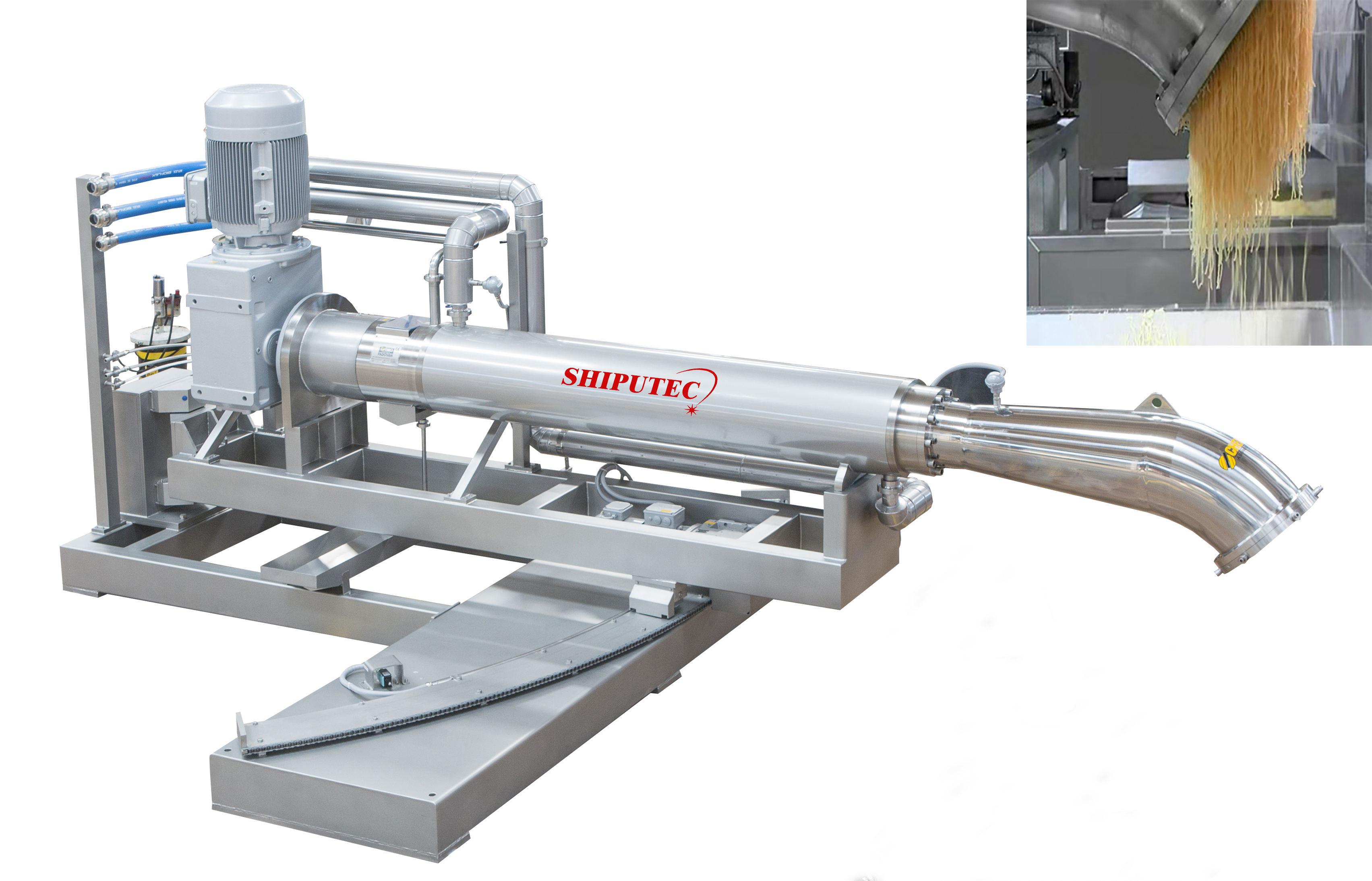
² Core positioning: Gel-type dedicated type, suitable for crystallization and molding of high-viscosity and easily gelatinized materials such as edible gel.
² Working pressure: 40–100 bars.
² Structural features: Optimized scraper geometry and rotation speed, enhanced shearing and mixing, promoting uniform crystallization of gels.
² Typical applications
Cooling crystallization and gelation of gelatin, pectin, carrageenan, xanthan gum, etc., edible gel.
Molding treatment of jelly, soft candy, medicinal gel matrix.
3. Application Areas and Process Scenarios
Oil and Fat Processing (Core Area)
² Shortening, margarine: The SPV series achieves rapid cooling from 70°C to 20–28°C, controlling the β' crystal form, and enhancing the spreadability and stability.
² Butter: The SPSV high-pressure series completes the high-pressure crystallization and shaping of sheeted / block-shaped butter.
² Chocolate, cocoa butter: The SPV/SPT series achieve precise temperature-controlled crystallization to ensure taste and luster.
Condiments and dairy products
² Mayonnaise, salad dressing: The SPV series undergoes low-temperature sterilization + cooling to retain emulsified state and flavor.
² Containing fruit granules jam: The SPT series undergoes sterilization + crystallization to protect the integrity of the fruit particles.
² Cream, cheese products: Gentle heat exchange to prevent fat globule damage.
Edible gums and gum products
² Gelatin, pectin: The SPVG series promotes uniform crystallization and controls gel strength and transparency.
² Jelly, soft candy: Precise temperature-controlled shaping to enhance product texture and taste.
Other high-viscosity materials
² Syrup, honey, maltodextrin: The SPV series performs efficient heat exchange to prevent crystallization and scaling.
² Pharmaceutical ointments, cosmetic pastes: Hygienic design to meet sterile and mild processing requirements.
4. Selection and Configuration Guidelines
|
Series |
Pressure Range |
Compatible Materials |
Core Process |
Recommended Scenarios |
|
SPV |
20–40 bars |
Medium-high viscosity paste, oil |
Freezing, sterilization, cooling |
Shortening, artificial cream, Mayonnaise, chocolate sauce |
|
SPSV |
60–120 bars |
High-pressure butter, hard oil |
High-pressure crystallization, molding |
Sheeted butter, block butter |
|
SPT |
30–80 bars |
Solid fruit paste, fruit puree |
Sterilization, crystallization, retaining particles |
Strawberry sauce, blueberry sauce, fruit-containing products |
|
SPVG |
40–100 bars |
Food gel, colloid |
Crystalization, gelation |
Glucosamine, pectin, jelly, soft candy |
5. Advantages Compared to Traditional Heat Exchangers
|
Item |
SSHE |
PHE |
Shell & Tube |
|
Viscosity |
High (≤1,000,000 cP) |
Low-Medium (<5,000 cP) |
Medium |
|
Granule or solid content |
Good |
easy to block |
Medium |
|
Anti-scaling / Ash deposition |
Extremely strong (dynamic wall scraping) |
Medium |
Bad |
|
Thermal sensitivity protection |
Excellent (short stay) |
Good |
Medium |
|
Crystallization control |
Precise and controllable |
No |
No |
|
cost of investment |
Higher |
Medium |
Low |
Summary
The SHIPUTEC scraped surface heat exchanger has core advantages of full pressure coverage, multi-series customization, and precise process matching. It is an ideal solution for high-viscosity, heat-sensitive, prone-to-crystallization, and particle-containing food material heat exchange. From low-pressure paste to high-pressure butter, from non-particle oil to fruit jam with solids, from edible gel crystallization to sterilization and conditioning, the four series can fully meet the diverse production needs of food processing enterprises, helping to improve product quality, production efficiency, and market competitiveness.
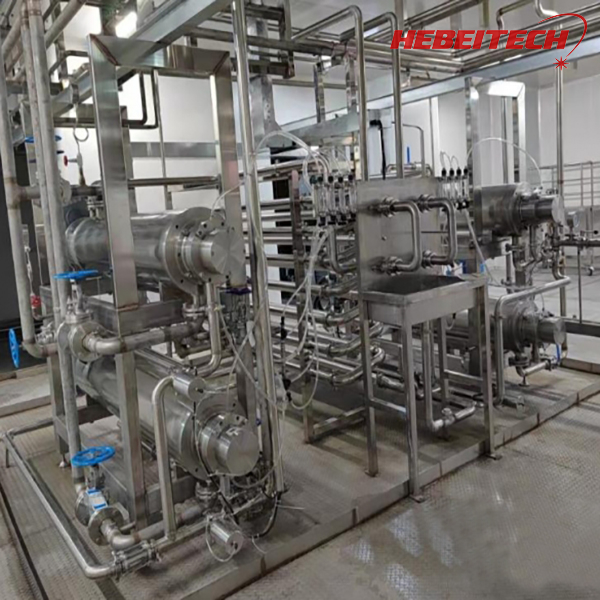
Site Commissioning