Homogenizer

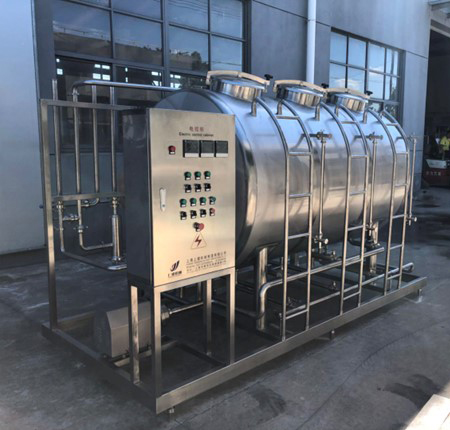
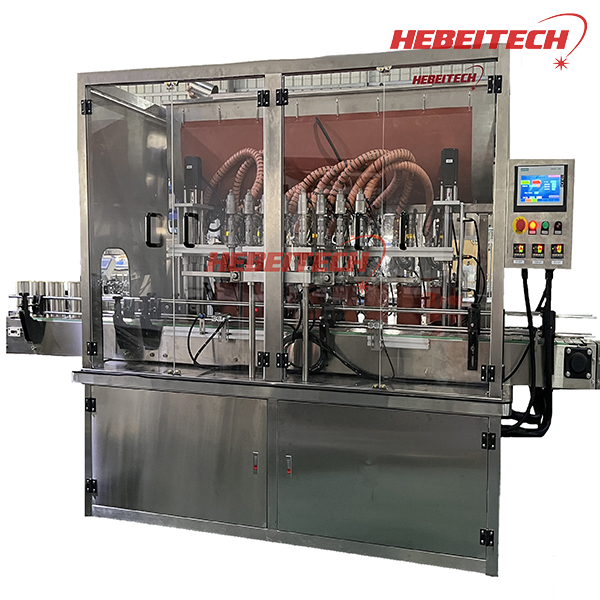
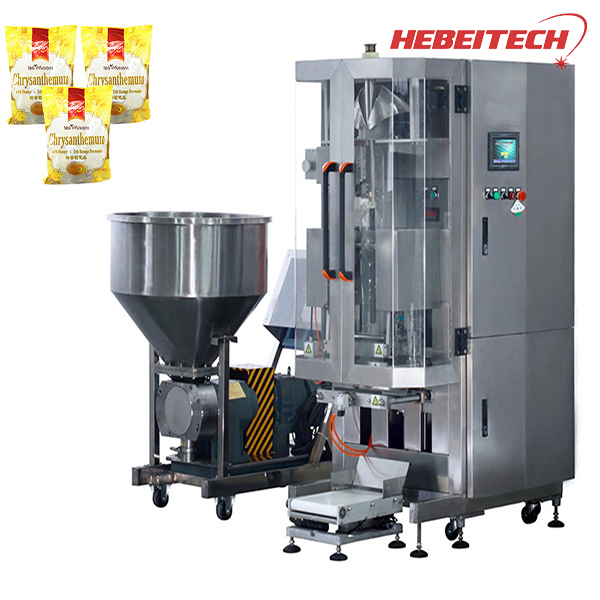
Equipment Photo
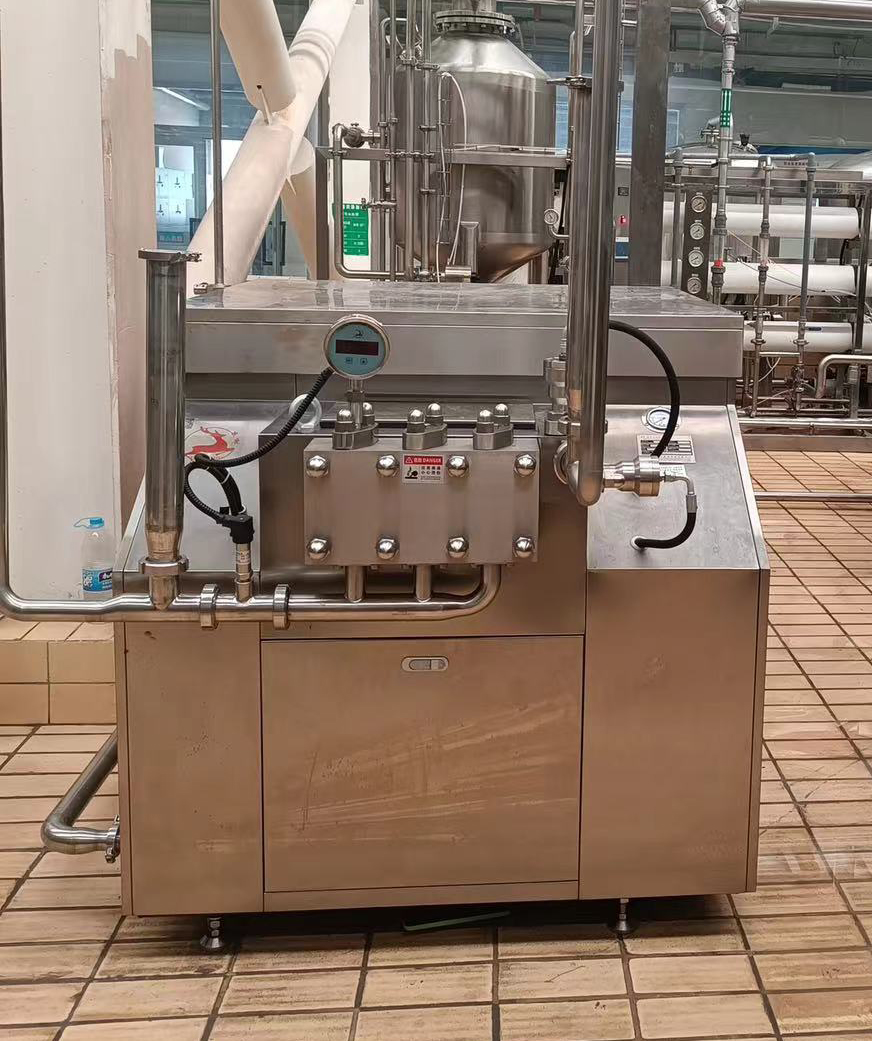
Description
The homogenizer acts as a "texture engineer" in butter production,margarine production and shortening production, reshaping the microstructure of butter through physical shearing or high-pressure disruption, thereby significantly improving its texture, stability, and functional performance.
Its main applications are reflected in the following core aspects:
- 1. Improved Spreadability and Plasticity Recovery
Butter straight from the cold storage is hard and difficult to package or use directly. A homogenizer can process large blocks of frozen butter into a soft, smooth, and uniform paste-like consistency.
Key function: It restores the original plasticity and spreadability of butter that may be lost during long-term storage or freezing, making it easier to spread and improving its texture. Typically, the equipment can process butter at temperatures as low as 0°C, raising the temperature to approximately 13–15°C after processing, achieving optimal physical properties.
- 2. Enhancing Microstructure and Product Stability
For butter-based processed products (such as whipped cream), the homogenization step plays a decisive role in quality. Academic research has shown that precise control of homogenization pressure can lead to the following improvements:
Prevent fat accumulation: In untreated products, fat globules tend to clump together and flocculate, leading to product instability.
Refined fat globules: After secondary homogenization at 3.0–4.0 MPa, the average particle size of fat globules is significantly reduced and their distribution becomes more uniform, effectively preventing flocculation.
Improved performance: This directly enhances product stability, reduces mixing time from 372 seconds to approximately 306 seconds, and increases aeration rate from 193% to over 235%, resulting in lighter and more stable finished products.
- 3. Achieving Precise Ingredient Blending
When preparing flavored butters (such as garlic or vanilla butter) or margarine, a homogenizer serves as an efficient platform for mixing and emulsifying.
Ensure uniform distribution: It ensures that solid ingredients such as salt, vanilla, and flavorings, or the aqueous phase (in oil-in-water systems), are extremely evenly dispersed throughout the butter matrix, resulting in a stable and consistently flavored final product.
Comparison of Main Equipment Types
Currently, the industry primarily uses the following two types of equipment, which can be selected based on production requirements:
Equipment Type | Core Principle | Application Scenarios | Key Features
Rotor-Stator Homogenizer | Utilizes the precise narrow gap between a rapidly rotating rotor and a stationary stator to generate intense mechanical shear, centrifugal compression, and impact forces, effectively breaking down particles. | Reviving frozen butter to restore its soft texture; producing margarine; efficiently blending ingredients. | Excels at handling high-viscosity materials, particularly effective in softening solid butter with relatively low energy consumption. Available in continuous and batch types.
High-Pressure Homogenizer | Forces material through an extremely narrow valve seat gap under high pressure (typically well above 5 MPa), leveraging cavitation, turbulence, and shear forces to break fat globules. | Producing high-quality butter-based whipped cream, dairy fats, and other products requiring ultra-fine and stable emulsions. | Strong capability for droplet refinement, delivering excellent stability and smoothness; commonly used in the initial stage of homogenization processes.
In actual production, these two types of equipment are often used in combination: first, a rotor-stator homogenizer is employed to "pre-treat" frozen butter, restoring its plasticity; then, a high-pressure homogenizer performs final fine processing to achieve optimal product quality.
Site Commissioning